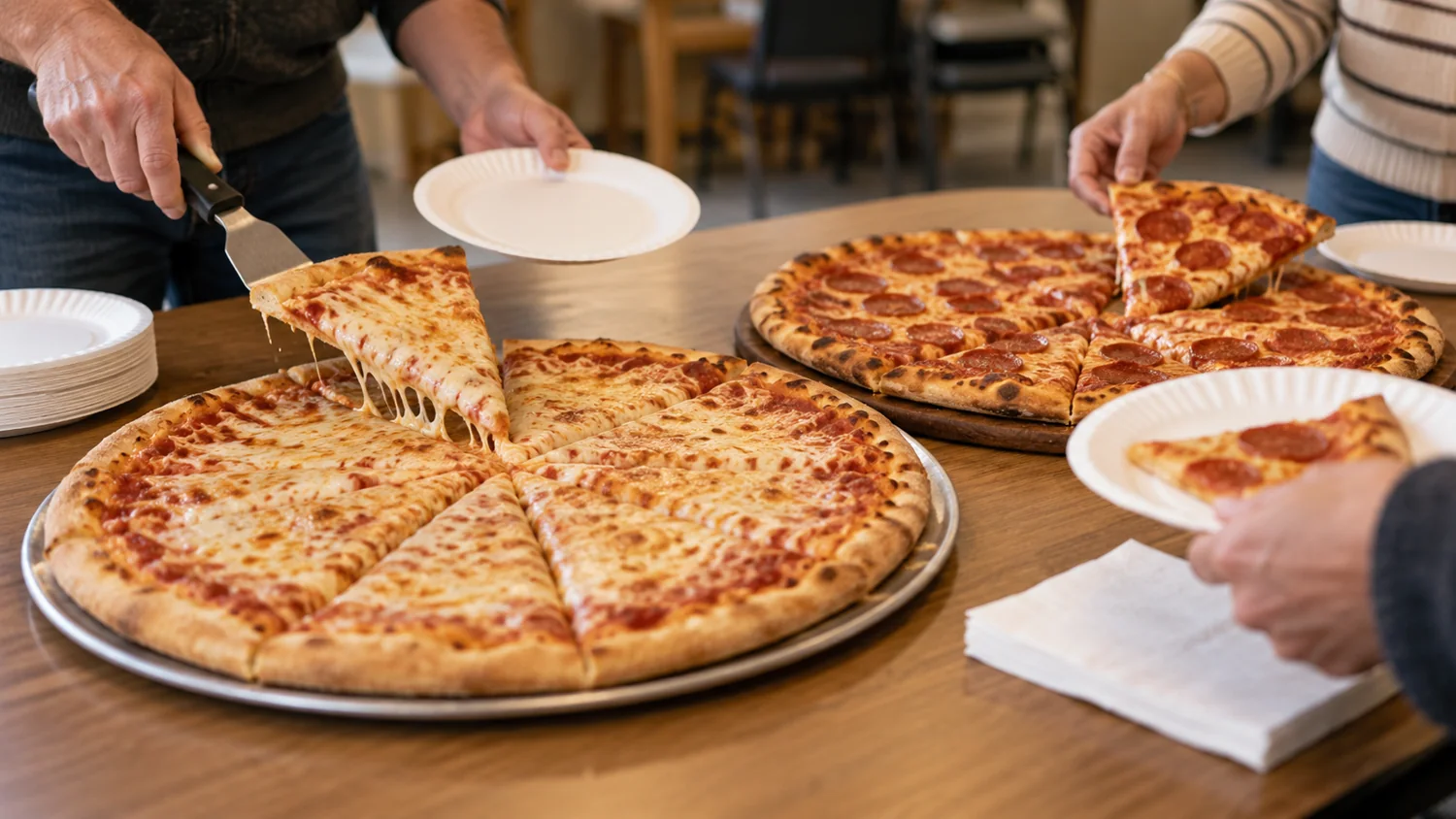
Pizza math is one of those ministry skills that rarely appears in a job description. Yet a food plan affects the budget, the volunteers serving, and whether the last students through the line get dinner. A few simple calculations make the night easier for everyone.
Start with Servings, Then Order Pizzas
Ask how many people you expect in each group, including leaders. Decide how many slices to plan for each person, then divide the total by the number of slices in a pie. Add a margin for attendance changes and uneven appetites.
For example, 24 pizzas cut into eight slices give you 192 slices. If 120 people each take one and a half slices on average, that is 180 slices, leaving only 12. At two slices each, you need 240 slices, or 30 eight-slice pizzas, before any extra margin. The difference between those assumptions matters more than the number of pizzas in the order.
Plan for the Groups That Will Actually Eat
A combined total can hide a shortage in one room. If five of those 24 pizzas go to kids and 19 go to youth, the groups have 40 and 152 slices respectively. Compare each allocation with that group’s expected attendance, not just the overall attendance.
How food is served matters too. When students can pick up two slices on the way in and take more to small group, some may eat before others are served. Have a team member serve the first round, count what is left, and offer seconds after each group has had a chance to eat. Make a plan for early arrivals and for anyone whose dietary needs require another option.
Compare Sizes by Food, Not by Pie Count
Two pizzas with the same number of slices are not necessarily the same amount of food. A rough way to compare round pizzas is area: π × radius². An 18-inch pizza has about 254 square inches of surface; a 14-inch pizza has about 154. That makes the 18-inch pie roughly 65% larger by area, even if both are cut into eight slices. Crust and toppings also affect how filling a slice is, so use area as a comparison, not a guarantee.
Count the Delivered Cost
Use the final amount your ministry will pay: pizza subtotal, minus discounts, plus tax, delivery, tip, and any payment fees. Then divide by the number of usable servings you expect. A cheaper listed price can be a more expensive meal once fees or smaller slices are included. Budgeting for a fair tip is part of planning the order.
Finally, confirm when the food will arrive, who will receive it, where it will be served, and what the team will do if attendance is higher than expected. The spreadsheet is small. The care behind it is visible in the room.